

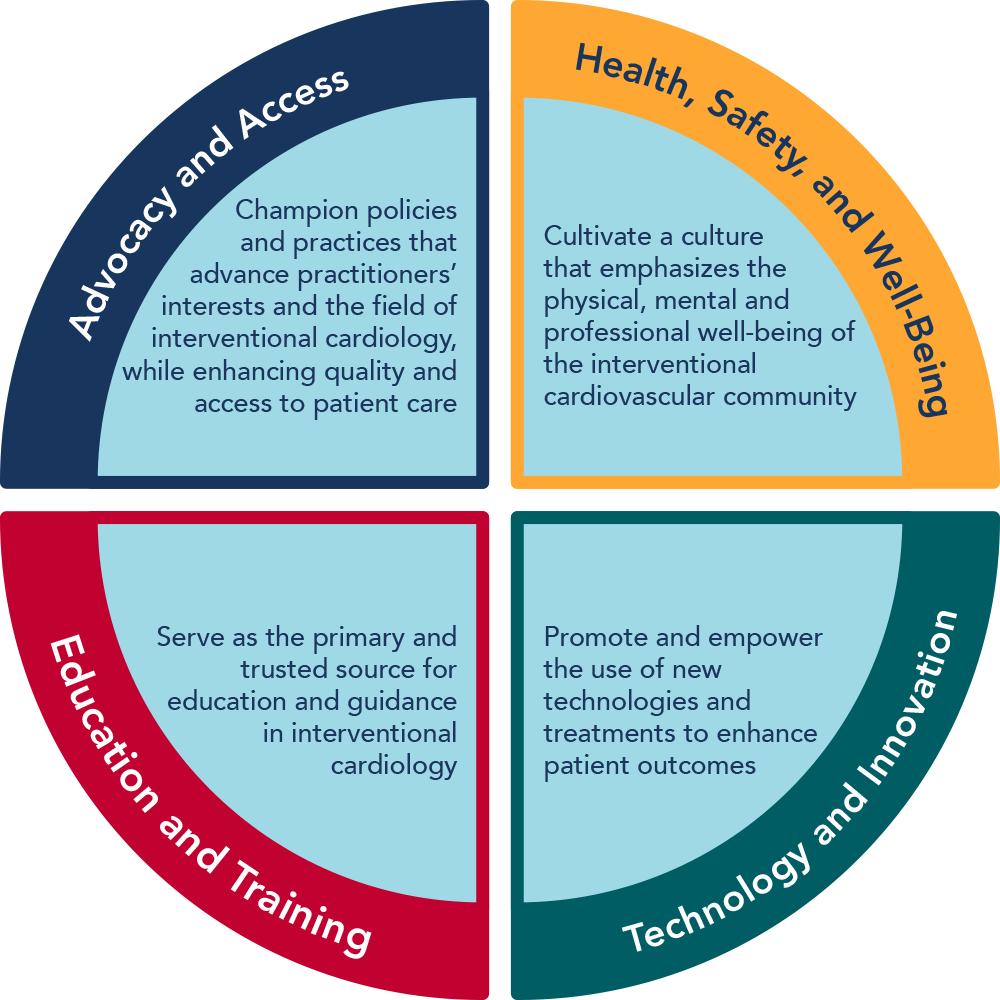

| 1.1 | Build coalitions for greater influence to address key policy issues such as reimbursement, coverage, and access that affect practitioners in interventional cardiology |
| 1.2 | Address disparities in interventional cardiovascular care and support initiatives that promote equitable access to quality treatment |
| 1.3 | Expand engagement opportunities with SCAI advocacy initiatives and SCAI PAC |
| 1.4 | Evaluate the workforce pipeline and skills gaps to address future healthcare challenges |

| 2.1 | Equip members with resources and advanced training to adopt techniques and technologies to build practice and procedural capabilities throughout their careers |
| 2.2 | Lead development of interventional cardiology standards and guidelines to ensure consistency and excellence across the field |
| 2.3 | Provide support designed for fellows-in-training and early career interventionalists to ensure success and sustainability of field |

| 3.1 | Foster a collaborative community and networking for peers to share experiences and solutions |
| 3.2 | Define and advocate for workplace safety standards to support healthy working environments and reduce workplace hazards |
| 3.3 | Identify resources and tools to expand mental health support, address burnout, and improve job satisfaction for practitioners |

| 4.1 | Guide and engage key stakeholders to set research agenda to advance the field of interventional cardiology |
| 4.2 | Support evidence-based emerging technologies and facilitate implementation in clinical practice |
| 4.3 | Position SCAI as the leading authority on applications of artificial intelligence in interventional cardiology to transform patient diagnosis, treatment, and outcomes |