

Ilya Ryaboy, MD, FSCAI; Lyndon C. Box, MD, FSCAI; Jacob A. Doll, MD, FSCAI
Introduction
A military adage states that war is long periods of boredom punctuated by rare moments of sheer terror. The same holds true for interventional cardiology. Most procedures are uneventful. However, some are extremely eventful, with patients rapidly deteriorating or in extremis. Complications during routine cases may unexpectedly occur, and cause a nonemergent case to suddenly transition into an emergency.
The stress reaction occurs in milliseconds in such situations. This is a normal component of human physiology. Unfortunately, the brain is unable to distinguish between the nature of the threat triggering the acute stress response.1 Physical threats and threats to our mental well-being (i.e., an iatrogenic complication in the cath lab) trigger similar physiologic reactions. This response — increased heart rate, increased blood pressure, vasoconstriction of the splanchnic vasculature and vasodilation of the periphery, pupil dilation, etc. — is useful physiology in the setting of physical danger but entirely counterproductive in the cath lab.
In recent years, there has been an increased interest in mental health and mental skills training, particularly in high-functioning fields such as professional athletics, emergency medical responders, and special forces operators.2-4 Techniques used in these fields are applicable to emergencies encountered in the cath lab and can help operators maintain calm under duress.
Managing the Acute Stress Response
Catastrophic thinking and flight of focus are normal human reactions to cath lab disasters. Stress-reduction techniques allow the operator to redirect their focus from mental noise to rapid identification and treatment of the problem at hand. Interventionalists can implement two such breathing techniques to decrease sympathetic tone, dampen the stress response, and ground focus: the physiologic sigh (aka cyclical breathing) and box-breathing.
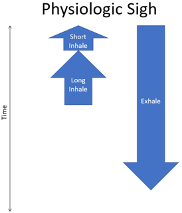
The physiologic sigh is composed of a deep inhale, followed by a second shorter inhale, and a super-long exhale for a total 1:2 ratio of inhalation to exhalation. The purpose of the second inhalation is to recruit additional alveoli for more efficient gas exchange.5 The longer period of exaggerated exhalation increases left ventricular (LV) preload and stroke volume while likely activating baroreceptors in the ascending aorta and carotid arteries. This is a trigger for parasympathetic tone and sinus arrhythmia, which slows the heart rate.6-7
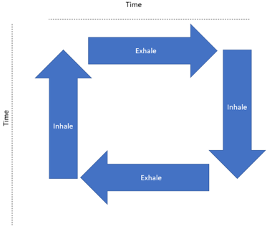
Box-breathing is a combination of breathing exercises and grounding techniques. In its most rudimentary form, box-breathing is simply two cycles of inhalation and exhalation in a 1:1 ratio.5 The main benefit comes with mentally picturing the drawing of a box in one’s mind while taking the breaths. Most find it easiest to begin at the lower left-hand corner, and with the first inhalation, begin drawing an arrow north. The following exhale would coincide with an arrow going east, then inhale south, and exhale west to finish the box. Visualizing this over the course of two or three “boxes” (four or six respiratory cycles) serves as a grounding function, bringing us back to the situation at hand instead of allowing the dizzying spiral of catastrophic thinking to drive our thoughts and actions.
Conclusion
Breathing techniques such as these are cost-free and easily performed, and they may also help calm nerves and guide focus during times when we — and our patients — need them most.
References
1 Godoy LD, Rossignoli MT, Delfino-Pereira P, et al. A Comprehensive Overview on Stress Neurobiology: Basic Concepts and Clinical Implications. Front Behav Neurosci. 2018 Jul 3;12:127.
2 Lester PB, Harms PD, Herian MN, et al. The Comprehensive Soldier Fitness Program Evaluation. Report 3: Longitudinal Analysis of the Impact of Master Resilience Training on Self-Reported Resilience and Psychological Health Data. Defense Technical Information Center. 2011.
3 Rodden-Aubut S, Tracey J. Mental Skills in the Armed Forces: A Scoping Review. Sport Exerc. Perform. Psychol. 2022;11:228–243.
4 Goodwin GF. Psychology in Sports and the Military: Building Understanding and Collaboration Across Disciplines. Military Psychology. 2008 Apr 3;20:sup1:S147–S153.
5 Balban MY, Neri E, Kogon, MM, et al. Brief structured respiration practices enhance mood and reduce physiological arousal. Cell Rep Med. 2023 Jan 17;4(1):100895.
6 Vaschillo EG, Vaschillo B, Buckman JF, et al. The effects of sighing on the cardiovascular system. Biol Psychol. 2015 Mar;106:86–95.
7 Russo MA, Santarelli DM, O'Rourke D. The physiological effects of slow breathing in the healthy human. Breathe (Sheff). 2017 Dec;13(4):298–309.
Related QI Tips
Other evidence-based methods and tools you can use to improve quality of care and outcomes for patients.